
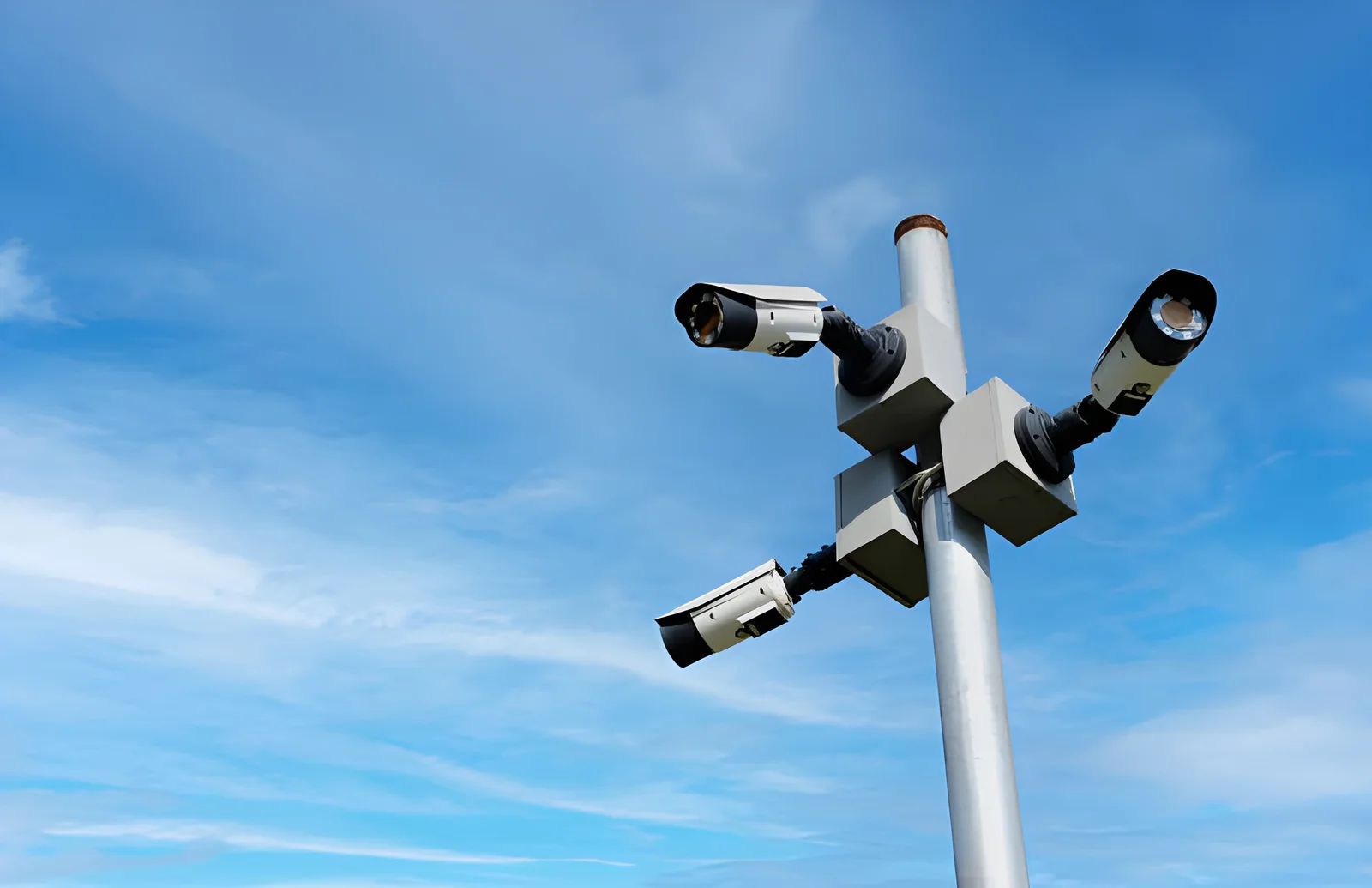
Entrances, yards and exposed areas
Planning outdoor CCTV installation for facilities
Outdoor camera performance depends on placement, light, weather, cabling and power. Resolution alone does not guarantee a useful image.
Updated:
Key points
- Define what each camera must show before selecting its lens or resolution.
- Sun, darkness, dust, rain and mounting vibration affect the final image.
- Protect cable routes, network equipment and power, not only the camera body.
Start with the purpose of every camera
A general view of a yard and a detailed view of a person at a gate are different tasks. Write the required outcome for each point: observe movement, identify a person, review vehicle direction, supervise loading, or protect a specific asset.
This prevents a common mistake: choosing a wide lens that sees the whole area but records too little detail where it matters. A site plan should show entrances, boundaries, blind areas, lighting and the direction people or vehicles normally travel.
Weather ratings are only part of outdoor protection
Ingress ratings such as IP66 or IP67 describe tested resistance to dust and water, but they do not solve every installation risk. Cable joints, connectors and junction boxes also need suitable protection. Water can follow a poorly formed cable path into an otherwise resistant camera.
Direct sun, high temperatures, wind, dust and mounting vibration should be considered for sites in Damascus, Rif Dimashq and other Syrian regions. The selected camera must suit the actual location, and its mounting surface must remain stable.
Lens, lighting and night image quality
More pixels do not automatically produce better evidence. The lens must place enough detail on the target, while shutter, compression and available light affect motion clarity. Strong backlight at a gate may require suitable wide dynamic range and careful camera direction.
Infrared lighting can help in darkness but may reflect from walls, ceilings, dust or nearby objects. Sometimes a small change in position or controlled visible lighting improves the result more than selecting a larger infrared range.
- Check the scene in daylight and after dark.
- Avoid placing the main target at the edge of an excessively wide view.
- Keep nearby walls and reflective surfaces out of the infrared path.
- Test moving people and vehicles, not only a still image.
Cabling, network and power continuity
Outdoor routes should protect data and power cables from weather, accidental damage and easy tampering. Network camera designs must account for cable distance, PoE capacity, switch location and the bandwidth handled by each link.
A power plan should include cameras, recorder, network switches and router where remote access matters. Surge protection, grounding and UPS requirements depend on the electrical environment and installation design; they should be assessed rather than added as generic accessories.
Installation and commissioning checks
Mount each camera securely, seal entries correctly and label both ends of every cable. Set names, date and time, recording schedules and user permissions. Then review live and recorded video under realistic conditions, including night lighting and movement.
Our broader CCTV installation guide for Syria explains recorder selection, storage and handover. For a real property, a professional camera survey should turn these requirements into a documented scope.
Outdoor cameras need planned maintenance
Dust, insects, vegetation, construction work and small camera movements can reduce coverage over time. Periodic checks should compare the current view with the approved view, clean the lens safely, inspect seals and mounts, and confirm recording and time accuracy.
Privacy and property rules also matter. Avoid viewing neighbouring private spaces without a clear reason, restrict access to recordings and confirm any applicable local or organisational requirements for the installation.
Frequently asked questions
Is IP67 always required for an outdoor camera?
The appropriate rating depends on exposure and installation conditions. The camera, junctions, connectors and cable entries should all be assessed together.
Which is better outdoors, a bullet or dome camera?
Neither shape is automatically better. Lens, mounting, weather resistance, infrared behaviour, tamper risk and service access should guide the choice.
Can an outdoor CCTV system work during a power cut?
Only components supplied by a suitable backup source will continue. Cameras, recorder, switches and router may all need to be included.
Why is the night image white or foggy?
Infrared may be reflecting from a wall, cover, dust, moisture or an object close to the lens. Position, cleaning, sealing and lighting should be checked.
How often should outdoor cameras be inspected?
Frequency depends on dust, weather, access and site risk. Check sooner whenever the view, focus, recording or physical position changes.
Plan the outdoor view before installing equipment
Ask Omniyat Solutions to review entrances, open areas, night lighting, cable routes and power requirements for your property.