Conventional and addressable systems
The panel architecture is selected according to site size, identification needs and future expansion.

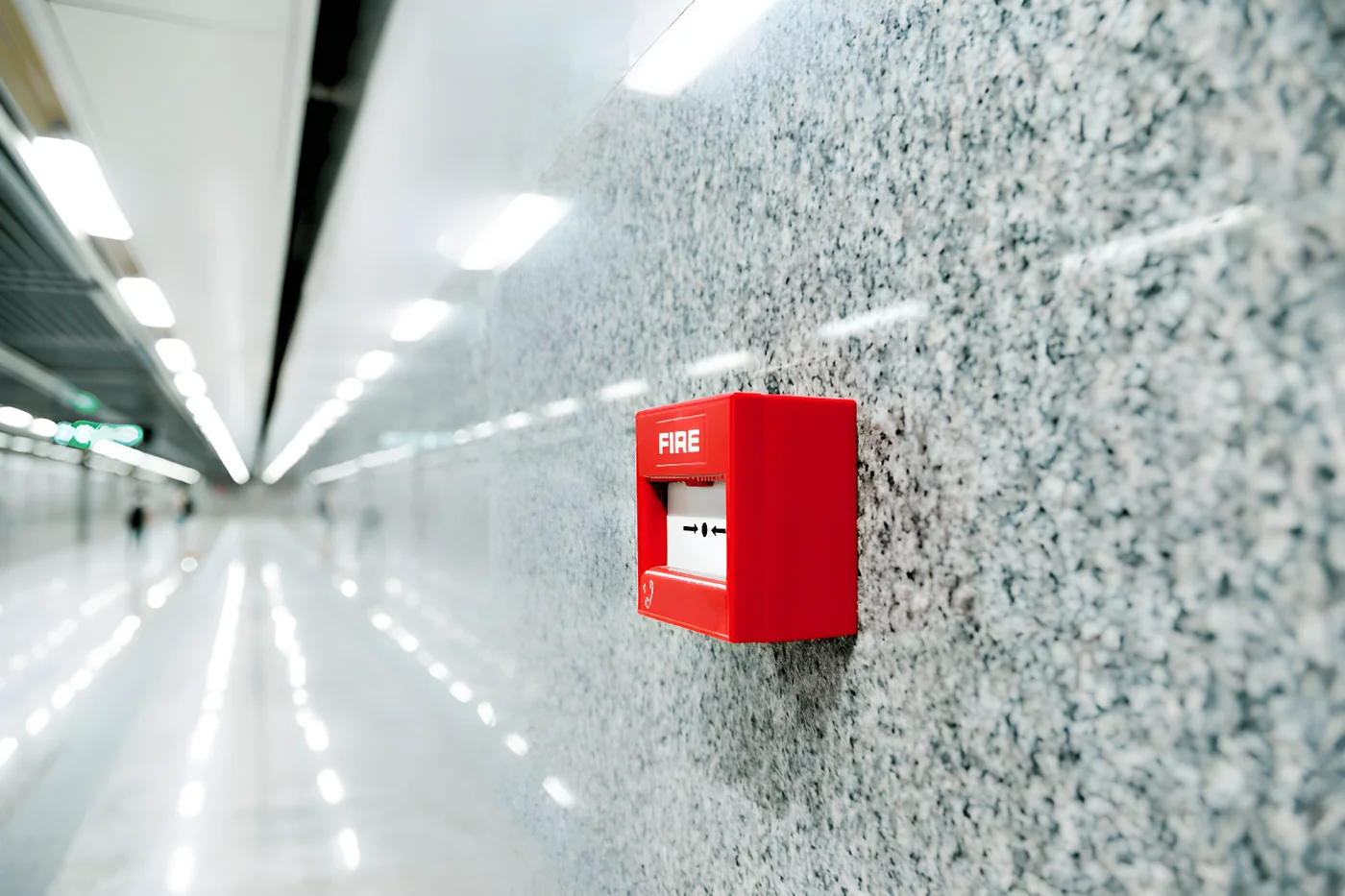
Early fire detection and warning
We design, install, commission and maintain fire alarm systems for offices, shops, warehouses, factories, hotels, clinics, schools and residential buildings in Syria.
A fire alarm system combines detectors, manual call points, sounders, control equipment, power and zoning so an incident can be recognized and occupants can respond quickly.
We study room use, ceiling conditions, environmental factors, evacuation needs and the required interfaces before selecting conventional or addressable equipment. Final design follows project requirements and applicable approvals.
Devices are selected and positioned as part of a coordinated detection and notification strategy for the property.
The panel architecture is selected according to site size, identification needs and future expansion.
Detector type is matched to room use, likely fire behavior and the risk of unwanted alarms.
Clearly located manual activation points support rapid warning when a person discovers a fire.
Sounders and visual devices are planned for the occupied areas and environmental conditions.
Control panels, circuits, zoning, fault reporting and standby power are configured and tested.
Where specified, alarms can coordinate with access, ventilation, suppression or monitoring systems.
We clarify the site, users, risks, priorities and the result the system must deliver.
We inspect coverage areas, installation routes, available power, network conditions and existing equipment.
You receive a clear scope with the recommended components, installation work, options and support requirements.
Our team installs, configures and tests the system under realistic operating conditions.
We explain daily use, document essential settings and agree on maintenance or follow-up support.
Planned maintenance can include panel and battery checks, detector and call-point testing, sounder verification, fault review, cleaning where suitable and documented corrective work.
Site surveys are available in Damascus and Rif Dimashq. Projects elsewhere in Syria are planned according to scope, access and schedule, with coverage confirmed before the visit.
Conventional systems identify a zone, while addressable systems can identify individual devices. The right choice depends on size, operation and project requirements.
Smoke, heat or multi-sensor detection is chosen according to the room, expected fire behavior and environmental sources of unwanted alarms.
Routine user checks and professional periodic maintenance should follow the system design, manufacturer guidance and applicable project requirements.
Panels normally use standby batteries sized for the designed operating period. Batteries and charging circuits require regular testing.
Yes, when the approved design requires coordinated detection, release and notification. The interface must be engineered and tested carefully.
We can inspect the installed equipment, faults, documentation and parts availability before confirming the appropriate maintenance scope.
Send the property type, size and available drawings. We will review the requirements and prepare an installation or maintenance proposal.