Hazard assessment
We identify the likely fire classes, critical assets, occupancy and operational consequences.

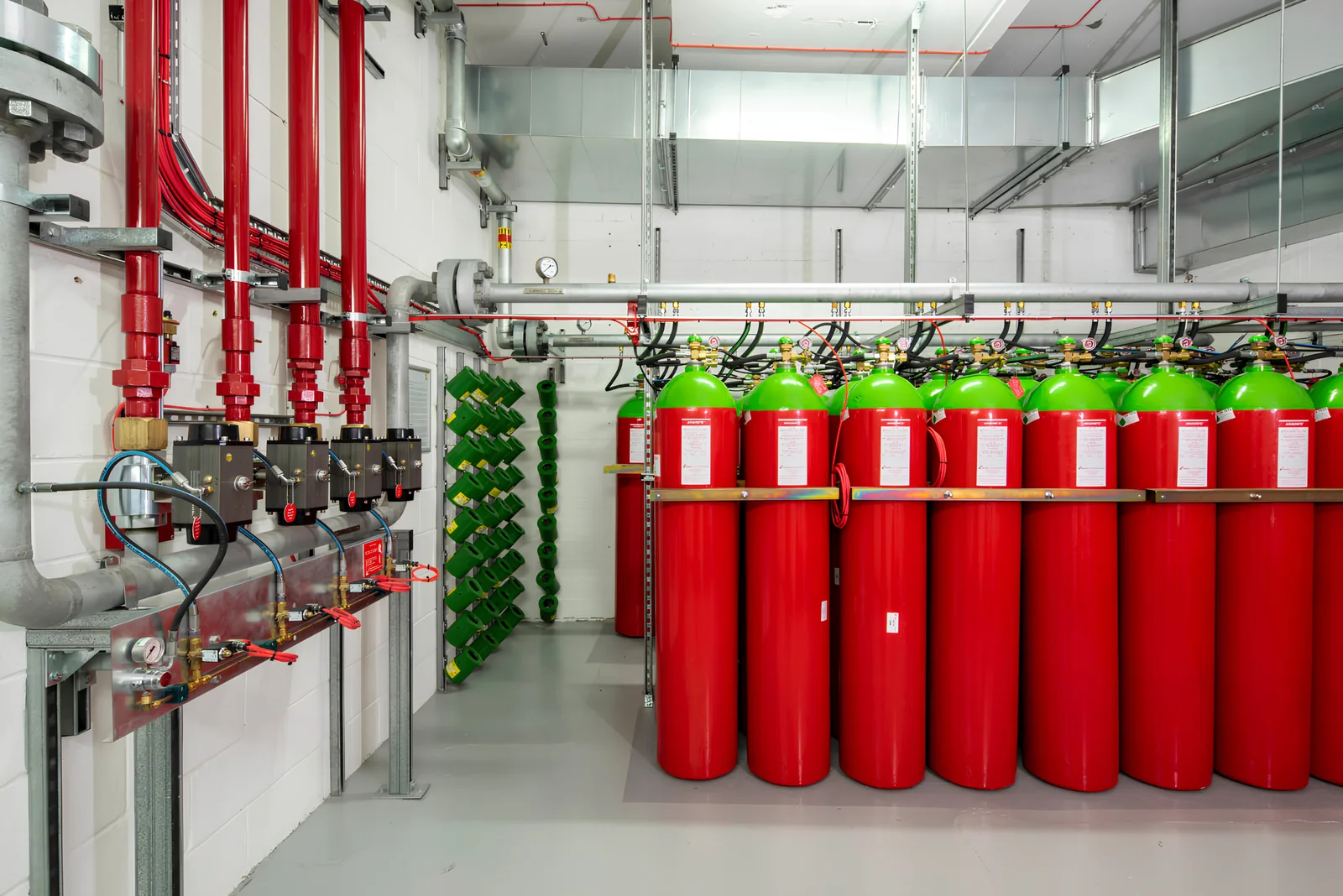
Engineered fire control for specific hazards
We assess, install, commission and maintain fire suppression solutions for server rooms, kitchens, warehouses, technical spaces and commercial or industrial facilities in Syria.
Fire suppression is not one product for every space. The fuel, equipment, occupancy, room integrity, ventilation, shutdown requirements and recovery priorities all influence the appropriate method.
We develop the scope around the actual hazard and coordinate detection, release, warning, isolation and safe operation. Final engineering, quantities and approvals follow the project conditions and applicable requirements.
The system type and release sequence are selected only after the protected risk and room conditions are understood.
We identify the likely fire classes, critical assets, occupancy and operational consequences.
Suitable technical rooms may use an engineered agent where residue and equipment protection matter.
Cooking hazards require dedicated detection, nozzles, shutoff coordination and service procedures.
Where specified, pumps, valves, piping and discharge components form part of the engineered scope.
Automatic and manual release, alarms, delays and interfaces are configured and tested as required.
Warnings, abort or isolation functions and operating instructions are included where the design requires them.
We clarify the site, users, risks, priorities and the result the system must deliver.
We inspect coverage areas, installation routes, available power, network conditions and existing equipment.
You receive a clear scope with the recommended components, installation work, options and support requirements.
Our team installs, configures and tests the system under realistic operating conditions.
We explain daily use, document essential settings and agree on maintenance or follow-up support.
Maintenance can include cylinder or pressure checks, valves, detection and release circuits, alarms, nozzles, hoses, batteries, interfaces and service records according to the installed system.
Site surveys are available in Damascus and Rif Dimashq. Projects elsewhere in Syria are planned according to scope, access and schedule, with coverage confirmed before the visit.
The answer depends on the fire hazard, protected assets, room, occupancy and applicable project requirements. A technical assessment is required.
It may be considered for suitable technical or electrical spaces where rapid suppression and minimal residue are important.
Many automatic systems rely on coordinated detection, warning and release controls. The exact sequence is defined in the approved design.
Commercial cooking hazards need a dedicated kitchen suppression design coordinated with appliances, ventilation and fuel or power shutoff.
Intervals depend on system type, manufacturer instructions and applicable requirements. Visual checks and professional periodic maintenance are important.
Yes. We review equipment condition, records, pressure, interfaces, room changes and parts availability before recommending work.
Send the room use, dimensions, protected assets and available drawings. We will review the hazard and define the next technical steps.